Can You Sell a Structured Settlement With a Lien, Child Support or Bankruptcy?
Legal-obligation review
A lien may change the transaction—but it does not create one automatic answer.
Identify the obligation, verify its reach and determine which approvals are required before relying on a proposed payout.
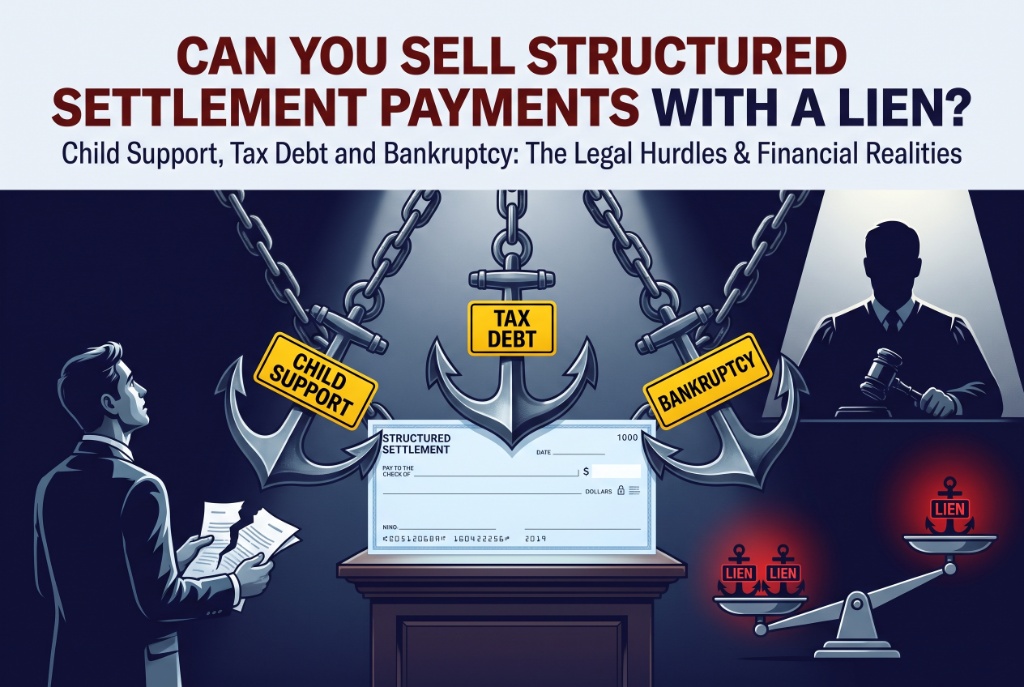
Quick answer. A lien, unpaid child support, tax debt or bankruptcy does not produce one universal yes-or-no answer. The issue may affect ownership of the payment rights, the availability of sale proceeds, court approval or the amount ultimately paid to you. Disclose it before accepting an offer so the transaction can be reviewed correctly.
Disclosure: SettlementDecisions.com is compensated by DRB Capital, LLC for qualified referrals. We are not a purchaser, law firm, tax adviser or bankruptcy professional. DRB determines whether it can consider a transaction. This article is educational and is not legal, tax or financial advice.
Determine whether the issue is child support, a tax lien, a judgment, a medical claim, bankruptcy or another legal restriction.
Obtain current payoff information and determine whether the claim reaches the payment rights, the sale proceeds or other property.
Legal counsel determines who has rights in the asset and whether bankruptcy, support or tax rules require additional authorization.
If legally available, the transaction documents explain how proceeds will be used and which obligations must be resolved at closing.
The structured settlement transfer court reviews the statutory requirements and the payee's best interests. Other court authorization may also be required.
A lien and a debt are not always the same thing
A debt is an obligation to pay. A lien is a legal claim against identified property or rights to property. Before evaluating a structured settlement transaction, determine whether a creditor merely alleges that money is owed or has obtained an enforceable lien, levy, garnishment or court order.
The distinction matters because a purchaser needs to know whether it can acquire the proposed payment rights and whether another party could claim the purchase proceeds. A credit-card balance without a judgment is different from a recorded tax lien, support withholding order or bankruptcy trustee's claim.
Do not rely exclusively on a credit report. Some legal claims do not appear there, and a listed collection account does not by itself explain whether a creditor has rights against the structured settlement.
Child-support obligations receive special attention
Unpaid child support can affect a proposed transfer through support liens, withholding orders, state enforcement procedures and the structured settlement court's duty to consider the welfare and support of the payee's dependents.
Under 26 U.S.C. § 5891, a qualified transfer order must find that the transaction is in the payee's best interest while taking into account the welfare and support of the payee's dependents. That makes support obligations directly relevant even when no creditor is contesting the payment rights.
A judge may ask whether the sale improves the household's position, pays verified arrears, removes essential future income or leaves enough resources for continuing support. Using proceeds to resolve arrears may support a transaction in some circumstances, but it does not guarantee approval.
Federal tax liens can reach broadly
Under 26 U.S.C. § 6321, when a person liable for tax neglects or refuses to pay after demand, a federal lien can arise against property and rights to property belonging to that person. Whether and how it affects a structured settlement transaction requires a specific legal and tax review.
Important questions include whether a valid lien exists, when it arose, what property it reaches, its priority and whether the IRS has issued any release, discharge, subordination or withdrawal documentation.
A lien release and a discharge are not identical. A release generally addresses the federal lien itself, while a discharge can remove specified property from the lien even though the underlying tax debt may remain. Never assume that paying an estimated amount at closing automatically resolves the federal requirements.
Bankruptcy requires immediate disclosure
If you are in an active bankruptcy—or recently received a discharge—do not sell, assign or promise structured settlement payments without discussing the transaction with your bankruptcy attorney.
Section 541 of the Bankruptcy Code defines property of the bankruptcy estate broadly. Whether structured settlement payment rights become part of the estate can depend on the settlement, ownership structure, anti-assignment language, applicable nonbankruptcy law and the timing of the bankruptcy.
Section 522 provides federal exemptions, while states may use different exemption systems or require residents to use state exemptions. The source of the settlement, the purpose of the payments and applicable dollar limitations can all matter.
Even when some payments may be exempt, the debtor still has disclosure obligations. A trustee or bankruptcy court may need to evaluate the proposed transfer or proceeds. Attempting a private sale without disclosure can jeopardize both the transaction and the bankruptcy case.
Judgment and medical liens vary by state
A civil judgment does not automatically attach to every structured settlement in the same way. Attachment, garnishment and exemption rules differ by state, and medical reimbursement claims may arise under contracts or specific government-benefit statutes.
Ask for a current written payoff and the document creating the claimed lien. The word "lien" should not be accepted as a complete legal explanation. The review needs the creditor's identity, asserted amount, legal basis, property affected and current status.
This hypothetical example only demonstrates how an obligation could reduce net proceeds. Actual lien treatment, costs and payout amounts depend on the transaction and governing law.
Why hiding the obligation usually backfires
A purchaser may initially calculate an offer from the payment schedule, but legal review examines more than the annuity. Undisclosed liens, bankruptcy cases and support orders can change the transaction structure, delay filing or make the original assumptions unusable.
Early disclosure does not guarantee eligibility, but it allows the relevant parties to determine whether the issue can be resolved. Late disclosure can produce a revised offer after significant time has already been spent.
Documents to gather before requesting a review
- The structured settlement agreement and release
- The qualified assignment, if available
- The annuity contract or current benefits letter
- Recent evidence of scheduled payments
- The lien notice or recorded judgment
- A current payoff statement
- Child-support or alimony orders
- Bankruptcy petition, schedules and case number
- Trustee and bankruptcy attorney contact information
- Documents from previous structured settlement transfers
Questions to ask before signing an offer
- Has the claimed obligation been independently verified?
- Does it reach the payment rights, the proceeds or both?
- Will another court or government agency need to authorize payment?
- How will the obligation be shown in the transfer documents?
- Will payment be made directly to the creditor at closing?
- What happens if the verified payoff exceeds the estimate?
- Could the purchaser revise or withdraw the offer?
- How much future income will remain after the transfer?
Frequently asked questions
Can I sell structured settlement payments if I have a lien?
A lien does not create one universal yes-or-no answer. The result depends on what kind of lien exists, whether it legally reaches the payment rights or proposed proceeds, its priority, the applicable state law and the court orders involved. Disclose the lien before signing a transfer agreement.
Can unpaid child support affect a structured settlement sale?
Yes. Federal structured settlement transfer law requires the court to consider the welfare and support of the payee's dependents. State support-enforcement laws, liens or withholding orders may also affect the transaction or how proceeds are distributed.
Can I sell payments while I am in bankruptcy?
Do not transfer or promise payment rights during bankruptcy without advice from your bankruptcy attorney. Payment rights or sale proceeds may be property of the bankruptcy estate, may be subject to an exemption or may require disclosure, trustee involvement or court authorization.
Does a federal tax lien automatically take the entire payout?
Not necessarily. Federal tax liens can attach broadly to property and rights to property, but the amount, priority, validity and treatment of a proposed transaction require a case-specific review. A lien release, discharge, subordination or payment arrangement may sometimes be relevant.
Are structured settlement payments protected from creditors?
Some protections may apply under the settlement documents, state exemption law, bankruptcy law or other statutes. Protection is not uniform, and converting protected periodic payments into cash can change the analysis.
Should I hide a lien until after receiving an offer?
No. A hidden lien can delay underwriting, invalidate assumptions behind an offer and cause problems during legal review. Early disclosure gives the purchaser and legal counsel time to determine whether the issue can be resolved.
Will a judge approve a transfer intended to pay debt?
Paying debt can be relevant to the best-interest analysis, but it does not guarantee approval. The judge may examine the debt, alternatives, dependents, proposed discount, remaining income and whether the transaction provides a durable benefit.
What documents should I gather before requesting a review?
Gather the settlement agreement, annuity contract or benefits letter, lien notices, current payoff statements, support orders, bankruptcy petition and schedules if applicable, trustee information and documents from any previous payment transfer.
Primary legal sources
- 26 U.S.C. § 5891 — structured settlement factoring transactions
- 26 U.S.C. § 6321 — federal tax liens
- 11 U.S.C. § 541 — property of a bankruptcy estate
- 11 U.S.C. § 522 — bankruptcy exemptions
- IRS — Understanding a federal tax lien
Continue with the structured settlement sale process, the document checklist or the structured settlement debt guide.
Cite this page
APA. SettlementDecisions.com. (2026). Can You Sell a Structured Settlement With a Lien, Child Support or Bankruptcy?. https://www.settlementdecisions.com/blog/sell-structured-settlement-with-lien-child-support-tax-bankruptcy